Good to know · British Shorthair
Getting to know the British Shorthair
Round eyes, a dense coat and an individual personality: the British Shorthair is more than a coat colour. Learn what a breed description explains, what it cannot promise, and which questions help you get to know a particular cat.
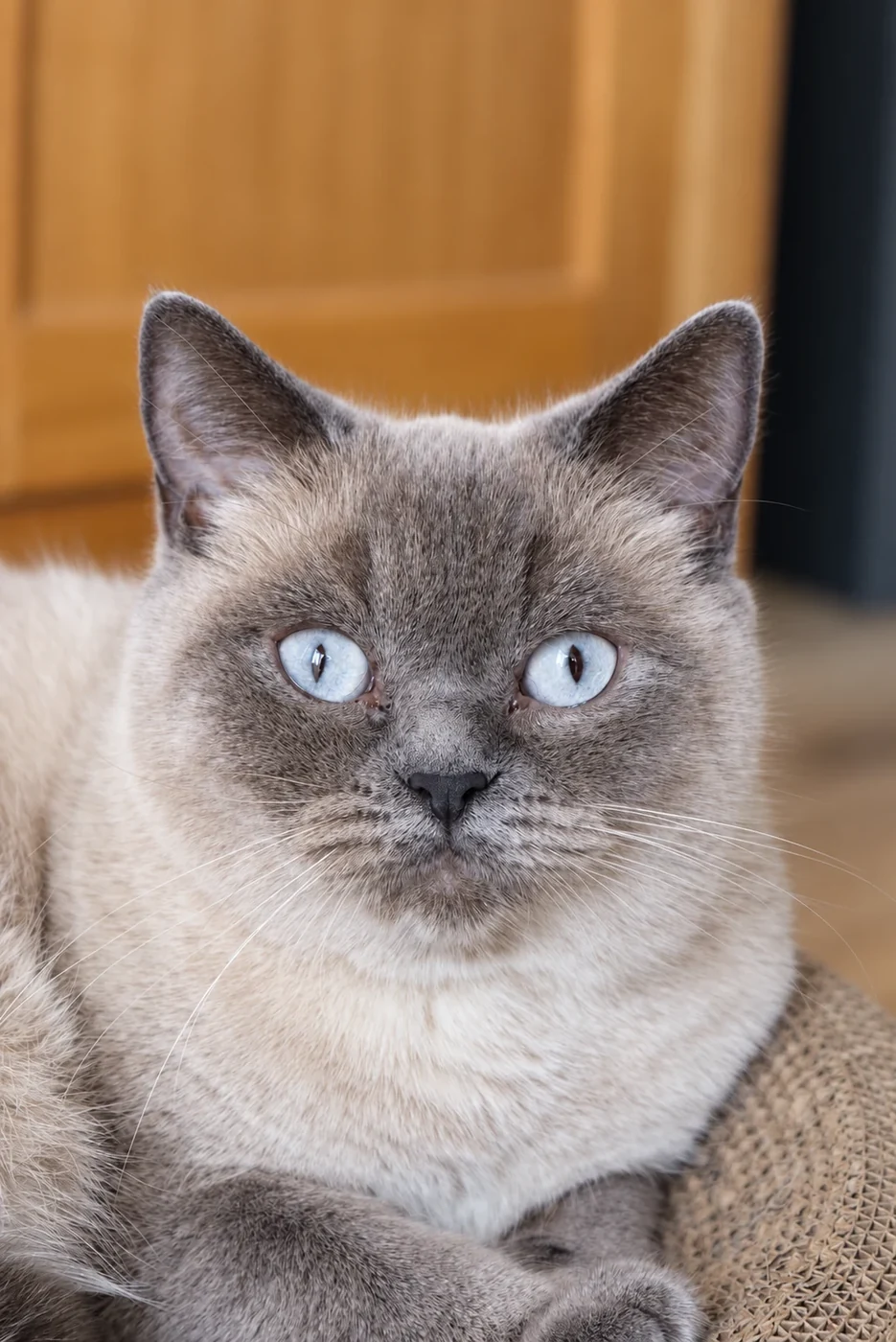
The breed at a glance
One face. A whole personality.
- Breed type
- A rounded head and a short, dense coat.
- Coat colour
- Blue Point is one of many colour varieties.
- Personality
- Get to know the individual cat.
What makes a British Shorthair
BKH is the German abbreviation for Britisch Kurzhaar; internationally you will also see British Shorthair or BSH. The FIFe standard describes features including a substantial body, rounded head, widely set eyes and a short, dense coat. This describes breed type; it is not an instruction to make a cat as heavy or extreme-looking as possible. The individual always matters. A standard helps you interpret pedigree terms and breed descriptions, but it cannot replace an examination or tell you how a particular cat behaves at home. Source: FIFe breed standard, July 2026.
Blue is one colour, not the whole breed
Many people first associate British Shorthairs with a blue-grey coat, but the breed includes many colours and patterns. FIFe lists British Shorthair and British Longhair as related breeds with separate names. A blue coat alone therefore does not make a cat a British Shorthair, and a British Shorthair does not have to be blue. Notice whether a description concerns breed, hair length, basic colour or pattern: those answer different questions. Blue and Blue Point are not interchangeable names either. Our colour article separates them into understandable parts. Source: FIFe breed profile.
Personality: observe before assuming
Breed profiles often describe British cats as gentle and affectionate, but that does not promise a particular temperament for every kitten. Instead, ask how an individual seeks company, plays, reacts to novelty and takes a break. A cat can enjoy being near you without wanting to be carried constantly. Allow time for the cat to initiate contact and respect pauses. Cat-friendly interaction guidelines emphasise choice and individual responses. That is more useful during a first meeting than a label such as “guaranteed lap cat”. Notice, too, whether you can recognise the cat’s body language and respect its boundaries. Source: AAFP/ISFM interaction guidelines.
A home that meets a cat’s needs
Even a quiet-looking cat needs opportunities to play, scratch, watch its surroundings and sleep undisturbed. Plan hiding places and accessible raised resting areas. Food, water, litter trays and resting areas should be sensibly distributed; in a multi-cat household, one shared station is not automatically enough. The AAFP/ISFM environmental guidelines organise these needs into five key areas. A useful planning question is whether the cat has a choice rather than having to tolerate an uncomfortable situation. Imagine your home from the cat’s perspective, considering quiet routes as well as time for shared play. Source: Feline Environmental Needs Guidelines.
Separate pedigree, colour and health information
A pedigree documents registered ancestry. A colour name describes an observable feature, while a genetic test answers a particular question about the variants examined. None of those alone means that a cat is healthy in every respect. Lyons’ professional review explains why test selection and interpretation must fit the particular trait. When looking at a report, ask how it is linked to the animal, when the examination took place, which method was used and exactly what the result means. One clearly explained report is more useful than an unexplained list of abbreviations. This knowledge page describes general principles and does not publish results for individual animals. Source: Lyons, Genetic Testing.
Useful questions for your first visit
Before a conversation, note how your household works: who lives there, which animals are already present, when someone is at home and where a quiet retreat could be. Then ask specifically about feeding habits, favourite games, everyday experiences and reactions to new situations. Ask which documents can be viewed during a visit and which information about the individual is actually known. Give yourself time to consider the answers. The aim is not to pass a test full of technical terms; it is to understand honestly whether this cat’s needs and your home fit one another.
It also helps to ask which routines could remain familiar after a move and which changes you would introduce gradually. That turns a lovely first impression into practical preparation. A colour preference can be part of the conversation, while the needs of the individual cat guide the decision.