
Good to know · British Shorthair
Heart & kidneys: understanding HCM and PKD
HCM and PKD are different diseases often mentioned in discussions about pedigree cats. This guide explains the terms and suggests useful questions when looking at screening documents. The information is general: it does not describe a diagnosis or the health status of Merle or any other individual cat.
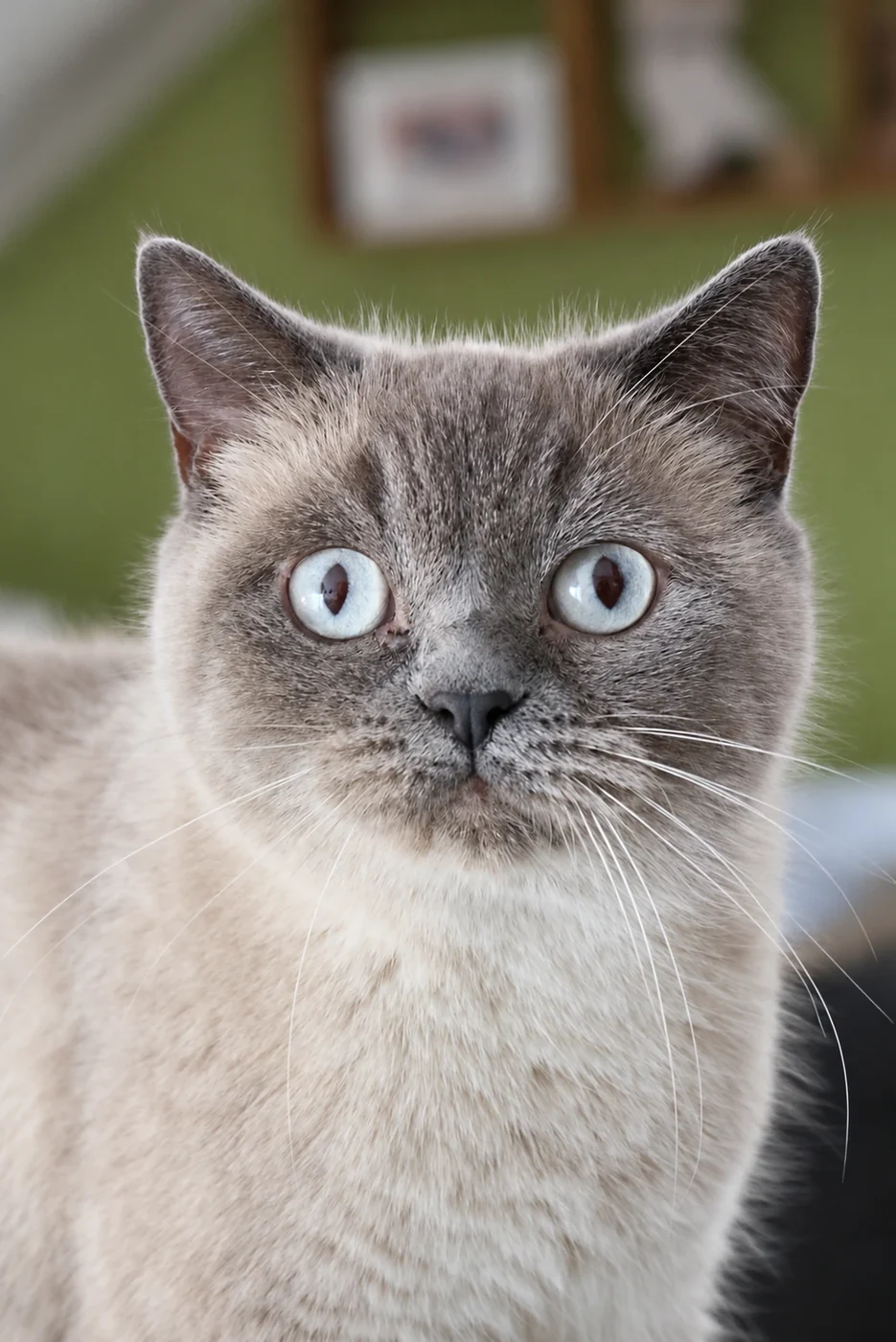
Understanding health information
The right question for each finding.
- HCM · heart
- Understand heart muscle disease and examination methods.
- PKD · kidneys
- Understand cysts and what targeted tests can show.
- Individual report
- Check the cat, date, method and limitations.
HCM affects the heart muscle
HCM means hypertrophic cardiomyopathy. Heart muscle becomes thickened, which can affect how the heart fills and functions. An affected cat may initially appear entirely well. Conversely, one abnormal sign alone does not establish HCM. Other causes, including high blood pressure or an overactive thyroid, can also be associated with heart muscle thickening and require veterinary assessment. Cornell Feline Health Center – Hypertrophic Cardiomyopathy
For you, this means that “heart murmur”, “heart ultrasound” and “HCM” should not be treated as interchangeable terms. Ask what the actual finding was and who interpreted it.
An ultrasound describes a point in time
Echocardiography is the central imaging examination used when investigating HCM. Its quality and interpretation also depend on the examiner’s experience and the scope of the examination. The ACVIM consensus describes structured cardiac assessment for breeding cats; uncertain findings may require reassessment. ACVIM consensus statement on feline cardiomyopathies (2020)
When reviewing documents, connect the animal’s identity with the examination date, method and professional interpretation. A previously unremarkable heart scan is not a lifetime guarantee. A veterinarian experienced in cardiology should decide whether and when further examinations are appropriate for that particular cat. A fixed calendar on a website cannot make that decision.
Why an HCM DNA test does not answer every question
A genetic test looks for the variants it was designed to detect. For example, the UC Davis VGL HCM test for Maine Coons detects the A31P variant; it is not a universal test excluding HCM in every cat breed. HCM without that variant has also been documented. UC Davis VGL – HCM in Maine Coons: scope of the DNA test
A negative result for a variant studied in another breed therefore does not establish that a British Shorthair is generally free of HCM. Ask which variant was tested, in which breed it is informative and how the result is interpreted alongside clinical examinations. A long list of test names is not particularly helpful without that context.
PKD affects the kidneys
Polycystic kidney disease involves fluid-filled cysts within kidney tissue. Their size, progression and effects vary. The disease is particularly associated with Persian ancestry but is also described in other cats, including British Shorthairs. A cat may remain outwardly well for a long time; appearance alone cannot reliably establish the condition of its kidneys. Cornell Feline Health Center – Polycystic Kidney Disease
It is important to distinguish a genetic variant, an imaging finding and actual organ function. These describe different parts of a medical picture and should not be compressed into a single advertising promise.
Distinguishing a PKD1 test from a kidney scan
A DNA test is available for a particular PKD1 gene variant associated with a recognised inherited form of PKD. UC Davis lists British Shorthairs among suitable breeds. This variant is inherited in an autosomal-dominant manner, so one copy can be relevant. A negative result concerns the variant tested; it does not exclude every possible kidney disease. UC Davis VGL – Polycystic Kidney Disease (PKD1)
A kidney ultrasound answers a different question: what do the kidneys look like at the time of examination? The appropriate combination of investigations depends on the question and requires professional judgement. “DNA tested” and “ultrasound scanned” are therefore not interchangeable descriptions of one identical finding.
Useful questions for a viewing
You do not need to interpret medical measurements yourself. It is more useful to understand which documents belong to which animal. Before a viewing, write down what you would like to understand:
- Which animal does the document refer to, and how is its identity recorded?
- Is this a laboratory report, an ultrasound report or a general examination?
- When was the examination performed, and what question was it intended to answer?
- Is there a clear professional interpretation or a recommendation for further assessment?
- Which information should you later take to your own veterinary practice?
Ask about unfamiliar terms and allow time for your decision. A conversation should explain the context rather than impress you with abbreviations. Examination documents can be viewed during a viewing appointment.
Screening is a responsibility, not an absolute promise
Screening can provide valuable information without predicting every future development. Listening to the heart, blood tests and radiographs each have their own roles and do not automatically replace targeted cardiac imaging. The veterinary team interprets the findings together. UC Davis School of Veterinary Medicine – Hypertrophic Cardiomyopathy
For a fair understanding, separate three questions: what was actually examined, what does the particular report say, and what remains uncertain? This knowledge page does not publish individual examination results. It helps you ask informed questions in person; diagnosis or treatment of your own cat belongs with your veterinary practice.
Sources & further reading
- Cornell Feline Health Center – Hypertrophic Cardiomyopathy
- ACVIM consensus statement on feline cardiomyopathies (2020)
- UC Davis VGL – HCM in Maine Coons: scope of the DNA test
- UC Davis School of Veterinary Medicine – Hypertrophic Cardiomyopathy
- Cornell Feline Health Center – Polycystic Kidney Disease
- UC Davis VGL – Polycystic Kidney Disease (PKD1)